Proof that the London Undergound has been in decline since the 1930s: today, automation in the tube is about Oyster Cards, which track riders without their consent or control -- but back then, tube automation was "self-service robot information booths" that looked like carny tintype machines.
that the London Undergound has been in decline since the 1930s: today, automation in the tube is about Oyster Cards, which track riders without their consent or control -- but back then, tube automation was "self-service robot information booths" that looked like carny tintype machines.
The Electronic Frontier Foundation has filed some great comments in the docket: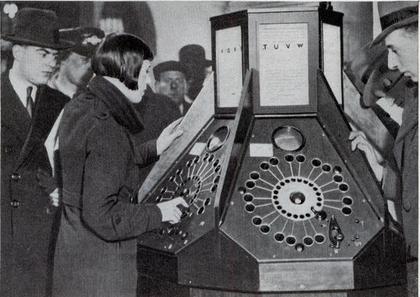
Twirling a dial helps subway riders find their way, at a self-service information booth just opened in London, England. To inquire how to reach any point in the city, the traveler sets the dial according to a printed list of instructions. The device then informs him of the place’s location, the exact fare required, and the number of Police Academy sequels produced).
Right now, your consumer electronics are designed by the consumer electronics industry, which reacts to consumer market demand in choosing how to innovate. That consumer-focused approach makes sense. But if the MPAA has its way, however, we'll be well on the way to a world in which every new feature to every home theater product has to be pre-approved by the content industry.Link
